Literature Survey like a Detective
This workshop approaches a literature survey as a detective approaches a case. It is for senior undergraduates and early graduate students learning to find relevant information, read it critically, and build a coherent understanding of their research field.
We will collect papers with Perplexity, Consensus, and targeted searches in Litmaps; organize and analyze them with Zotero and Notion; and use an investigation board to connect the evidence, form hypotheses, and identify gaps. Those connections become the basis for a research narrative.
The plot
A scientific phenomenon is our crime scene. Something has happened, leaving evidence and raising questions. Your hypotheses are the suspects: possible explanations to test and either confirm or rule out.
Scientists who have observed the phenomenon or claim to understand it are your witnesses. Some were at the “crime scene”; others investigated similar cases. Their papers are witness statements. Unlike in a legal setting, there are no formal consequences for inaccuracies or misleading information in these “statements.” Across the globe, researchers encounter similar phenomena, each claiming evidence and insights into what happened.
You are the detective. Analyze the evidence and decipher the witness statements to build a case. With high stakes and potentially limited evidence, you want to identify the true “culprit”: the most accurate explanation for the phenomenon.
You also collect evidence, analyze it as a forensic expert, follow leads as an investigator, and present the case as a lawyer. Piecing together the clues means doing all of these jobs.
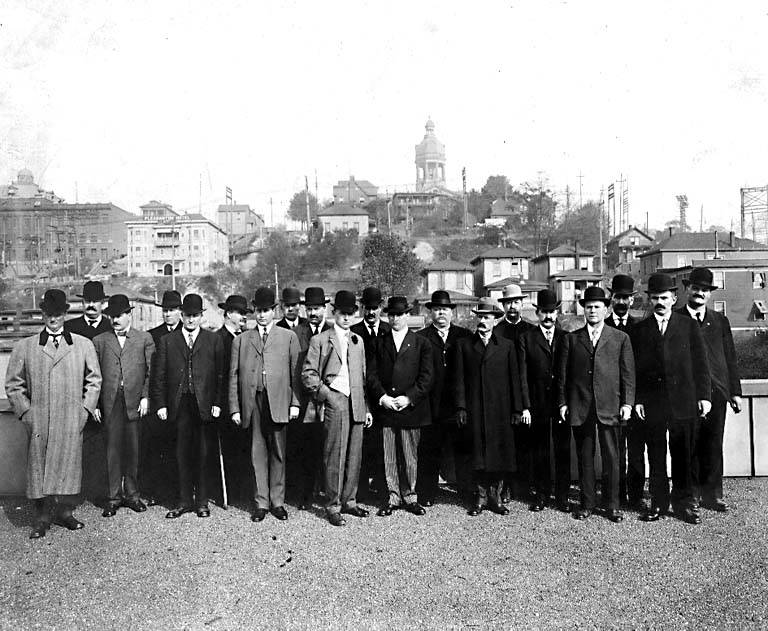
Reading the evidence
The evidence is not always clear. You need to “see the blood spatter” in the data and deduce who fired the gun. Finding and understanding it takes inference, induction, and deduction.
Why papers are hard to interpret
Witnesses give you more information than your case needs. You must discern. Cut through the clutter. They may also communicate unclearly, tell half-truths, or have an incomplete view. Even a rigorous scientific process does not make a witness someone you can trust blindly or completely.
At the edge of a research field, the witnesses themselves may not fully understand what is happening. Learn to recognize what you do not know.
Witnesses can exaggerate through misleading graphs, lie by violating research ethics, or oversell their findings. More commonly, they rely on hearsay: references and citations. Authors must cite other work, often without fully comprehending what they cite. A citation may support a specific point rather than the paper’s central theme.
Truth is context-dependent, and the devil is in the details. A result may hold only under certain conditions and may not generalize. You might not know all the assumptions. The witness’s social status and reputation are irrelevant; publication in a top journal does not guarantee reliability. Remember, witnesses pay to have their statements published.
Keep track of the papers you collect
Research papers are not organized or kept in one place for you, and many are behind paywalls. Collect the witness statements you think are important, understand them, and make the picture clear.
You would not gather all the witnesses in a room and then never talk to them. Yet a literature survey can leave you with hundreds of open browser tabs and papers scattered across unorganized folders. Investigate methodically so that you can see how they connect.
Work through the case
1. Chase the leads
Search the neighborhood with Litmaps, Research Rabbit, Google Scholar, and Google Images.
For a search with a specific question in mind, use Scite AI, Consensus, and Perplexity.
Memory is a residue of thinking. Leave a trail as you search:
- Copy text into loosely organized topics. It is okay to be disorganized at this stage.
- Add figures and images.
- Add the paper to Zotero.
- Record a citation, link, or anything that lets you trace information to its source.
This stage moves fast. Your findings may not make sense yet, and you do not need to organize everything. Record your thought process and what you find. You are collecting evidence to take to the evidence room, or chasing a suspect through an alley.
Not every detective solves a case in the same way. Every case is different. Move from the broad question to a smaller problem you can answer. Look where the evidence is.
Hannah Snyder’s methodological overview distinguishes systematic, semi-systematic or narrative, and integrative or critical reviews. Choose an approach based on your question and intended contribution, then record search terms, boundaries, and reasons for selecting sources. That record extends the detective’s “leave a trail” principle into a transparent search process.
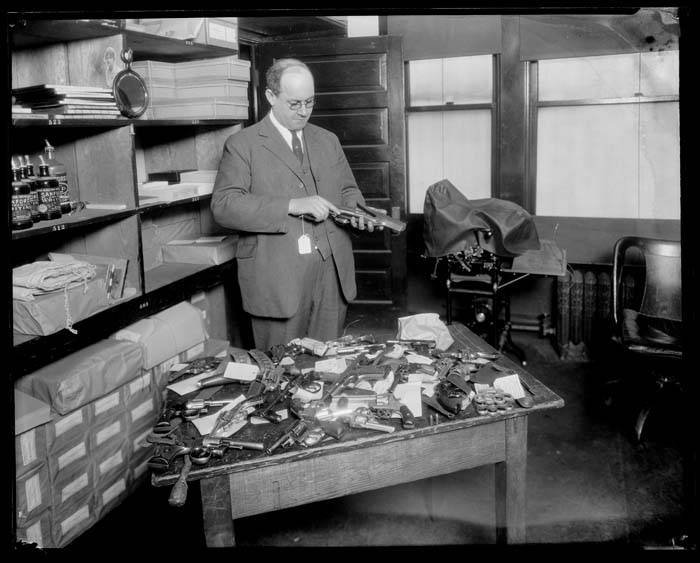
2. Organize the evidence room
Don’t let rats eat the marijuana. Give the evidence a place where you can find and read it.
In Zotero, categorize the witness statements and evidence into collections. As you read, take screenshots, highlight text, and write your thoughts in the comments. Record how your thinking develops.
Use Notero to sync your Zotero library to Notion automatically. Title each page using its BibTeX citation key.
As you read more papers, you will forget some of what you have read. At some point, let go of the guilt of not reading every paper in your library. Papers are not legal documents; they record what the witnesses say. There will be many witnesses saying many things. Follow the thread that connects them to the bigger picture. That thread matters to you, not the witnesses.
3. Build the investigation board
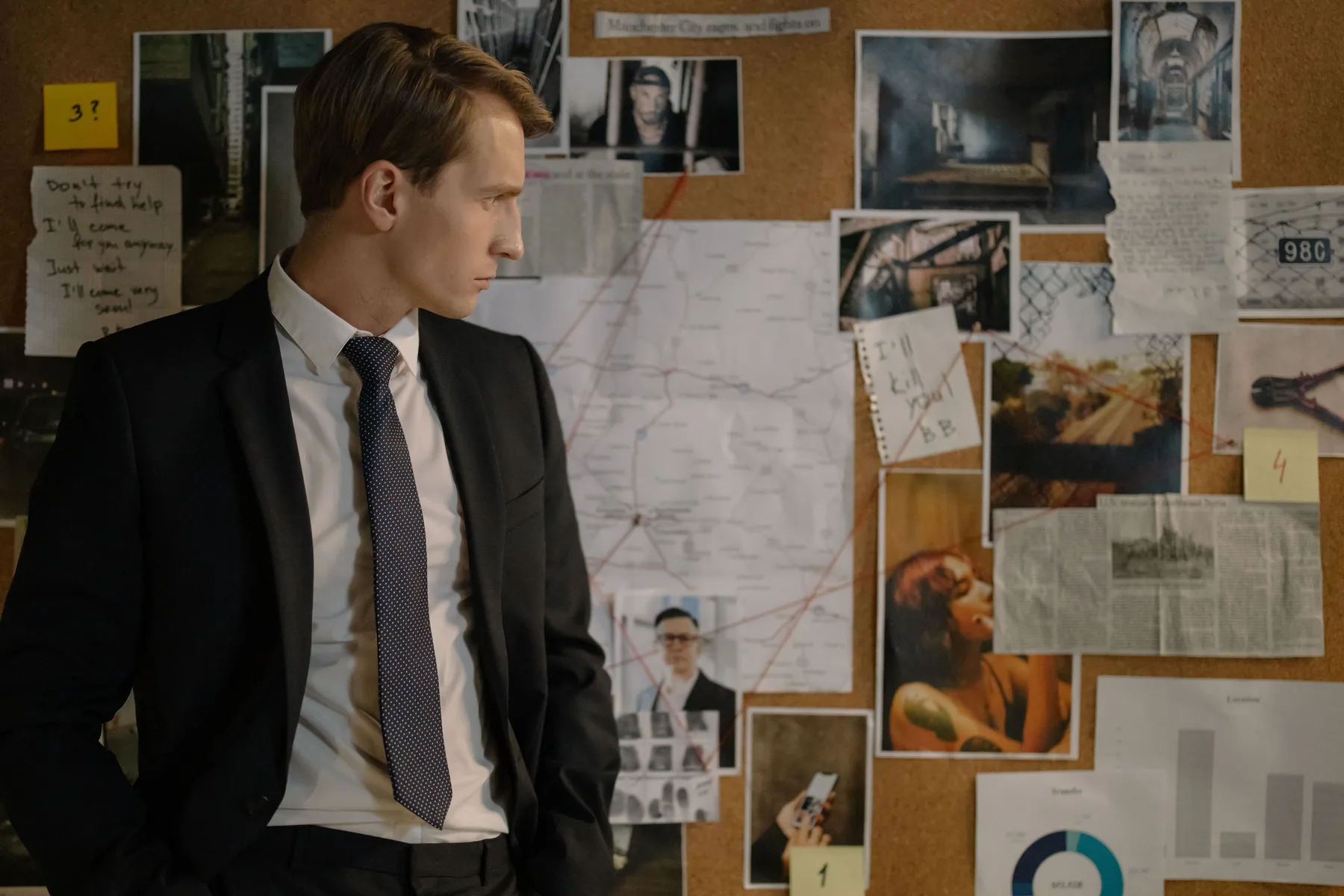
The detective’s crazy wall starts with a specific question. You may want to ask many, but your research will answer only a select few. Part of a PhD is finding the question you really care about among all the questions you could ask.
Bring together the relevant evidence and witnesses. Develop your suspicions, your hypothesis, your model. Write what you think and what you do not know.
Connect the threads by adding papers, images, and videos, using the citation key from Notero. The material becomes a little more organized here. Ask yourself whether the findings make sense. If they do, good. If they do not, find more papers and read.
This document holds your own questions and your worldview. It is personal, and it is where you can stand out as a researcher. A PhD is about asking interesting, unique, and solvable questions, formulating testable hypotheses, and designing clever experiments to test them. Write down your thought process as you develop the story for your paper or presentation.
Johannes Cronjé’s Literature Surveys includes literature-table examples and possible comparison fields. They can help you turn the investigation board into a structured comparison and later support the report’s narrative. Keep the focal question in charge. The table helps you compare witnesses and evidence; the comparison still needs to become a report.
4. Analyze the fingerprints
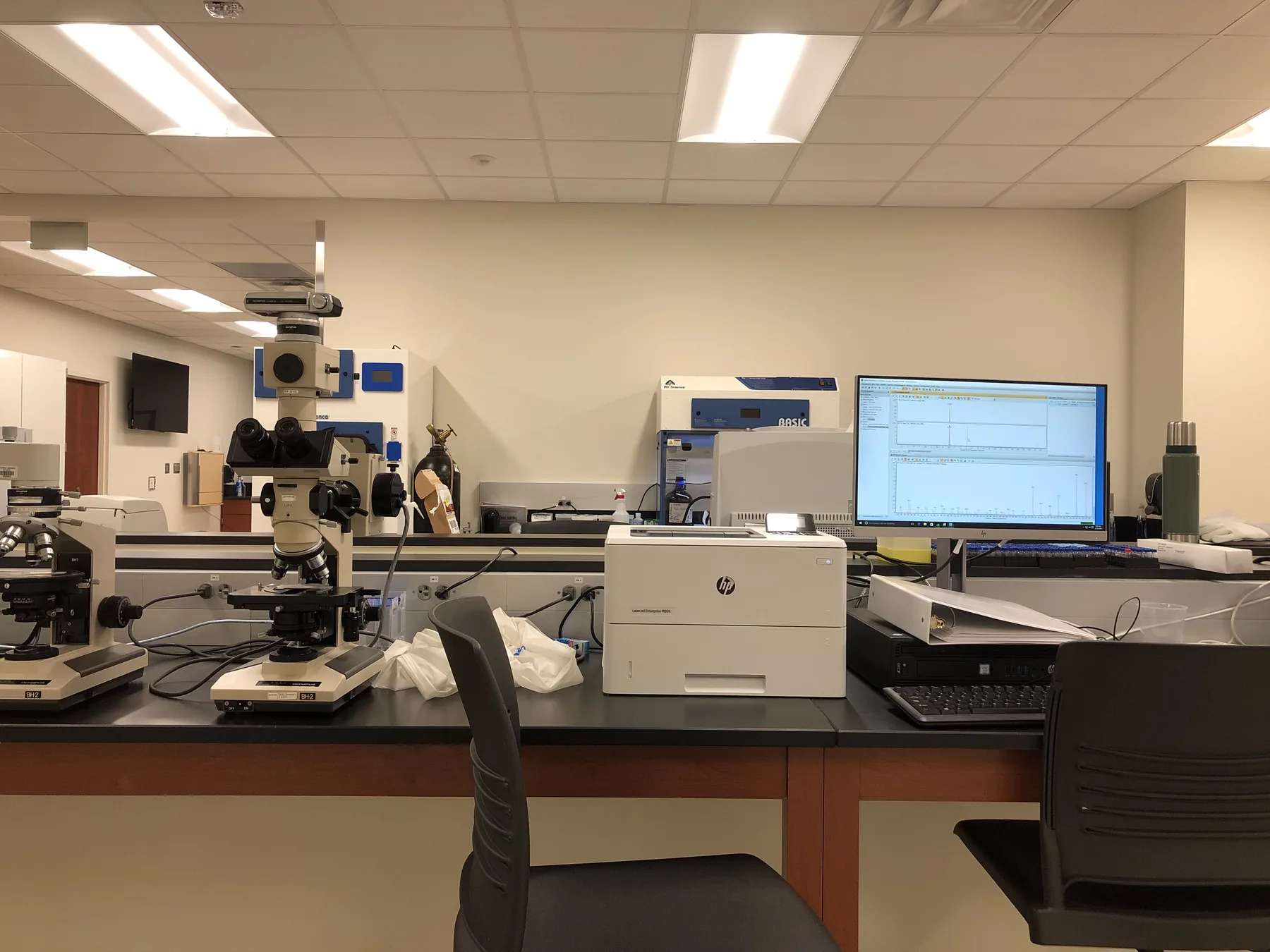
Make this your research workspace: a place to write questions, figure things out, and solve the scientific problem. It may include code scripts, laboratory records, or field notes, as well as topics to discuss with your principal investigator and collaborators.
This manufacturer’s guide gives a concrete laboratory example of planning benches, storage, and evidence movement in a physical forensic workspace.
5. Write the investigation report
“Suspect was seen wearing… something blue… I think?”
Write the first draft of your paper without worrying about the format. Put everything together and paint a story. Create content titles and try different sequences for your results as you work out how to write the paper. Bring together the references, mostly from the Crime Board, to support the story.
6. Present the case
The research presentation is your courtroom drama. Write the script before you shoot. Making a presentation is like shooting a movie or staging a theater production: start with a story, then write a script and make a storyboard.
Even experienced directors who improvise, such as Terrence Malick or Scorsese, first write a script, loose or tight. The same is true for theater. Leave improvisation for the shooting phase: making the slides.
Keep different versions of your slides, including short, medium, and long presentations. Use words as labels rather than symbols. When speaking, explain what the symbols mean and use images as analogies.
The story is the most important element. It can be character-driven or plot-driven; most presentations are character-driven. Name the lab whose paper you are citing, and explain what the results mean.
Keep three places for your work
- Potential witnesses: everything you read and come across.
- Investigation board: your questions, hypothesis, analysis, results, and witnesses.
- Investigation report: your writing.
Resource references
- Hannah Snyder (2019), Literature review as a research methodology: An overview and guidelines, Journal of Business Research, 104, 333–339.
- Johannes Cronjé, Literature Surveys.
- Patrick J. Mineault and The Good Research Code Handbook Community (2021), The Good Research Code Handbook. Zenodo. doi:10.5281/zenodo.5796873. The walkthrough layout was inspired by this handbook.
Image credits
- University of Washington Special Collections. Public domain (U.S.). ↩
- Webster & Stevens / MOHAI. Public domain (U.S.). ↩
- cottonbro studio / Pexels. Pexels License. ↩
- Mbrickn / Wikimedia Commons. CC BY 4.0. Resized and converted to WebP. ↩
.jpg)
.jpg)
